https://www.youtube.com/watch?v=W79KoZDycug



https://www.youtube.com/watch?v=W79KoZDycug
May 6, 2014
Dear CLTA-WA members,
As a 2013 University of Washington (UW) Technology Teaching Fellow applicant, I was interested in how a learning management system like Canvas could facilitate foreign language teaching and learning inside and outside classroom. I also investigated the possibility of using Canvas to better manage workload for teaching assistants and at the same time not to compromise student learning opportunities.
After being accepted and training as a UW Technology Teaching Fellow Summer 2013 and having integrated Canvas into my courses for Autumn 2013 and Winter 2014, I would like to share with you in a form of a poster of my experience in using Canvas to promote active and collaborative learning for foreign language education. Student feedback was gathered by having students fill out a user satisfaction survey about their learning experience within the Canvas environment. I would like to encourage colleagues in the State of Washington to contemplate the possibilities of using features within Canvas for better information dissemination, grade recording and learning outcome assessment.
Being not-so-tech savvy, my experience of learning and using Canvas and of being supported by the UW Center for Teaching and Learning (CLT) and UW-IT may help foreign language educators identify their pedagogical needs and wants and direct them to the already available resources if they decide to make Canvas an integral part of their course planning or course transformation in the future.
Respectfully submitted by
Nyan-Ping Bi
Senior Lecturer in Chinese Language
Department of Asian Languages and Literature
University of Washington
Seattle, WA 98195-3521
Poster
Questions:
How can instructional technology support students’ and instructors’ needs when
1. Transitioning a beginning foreign language course from a small class size to a large-lecture-and-small-quiz section format?
2. Transforming an advanced foreign language class from a traditional classroom setting to a hybrid class format?
Seeking Resources and Investigating Solutions:
1. 01/2013-03/2013: Joined the UW CTL’s Faculty and Professional Learning
Community facilitated by Professor Ben Marwick.
• Exchanged ideas with colleagues across the campuses on the topic of Engaging Students in Large Classes.
• Learned about Canvas as a learning management system.
2. 03/2013: Attended a UW-IT workshop on the topic of “Canvas as a Tool for Large-Class Engagement.”
3. 03/2013-05/2013: Joined the CTL’s Faculty and Professional Learning Community facilitated by Professor Linda Martin-Morris.
• Shared ideas with colleagues from different disciplines on the topic of “Flipping” the Classroom.
• Discussed the pros and cons of incorporating Canvas in course curricula.
4. 06/2013: Accepted to and attended the weeklong Technology Teaching Fellow Institute offered by the Office of the Provost in cooperation with CTL.
• Addressed pedagogical challenges by utilizing Canvas tools when redesigning a foreign language course.
• Applied skills to redesign a course by integrating Canvas tools to support instructional objectives.
5. 09/2013: Presented the redesigned course to the Institute fellows and received fellows’ reviews and feedback to modify the design before the AY 2013-2014 courses.
Employment of Canvas Tools
• AY 2013-2014: Chinese 101-103, First Year Chinese
• Winter 2014: Chinese 470, Contemporary Chinese Documentaries
Assessment Method
• Conducted a Canvas user satisfaction survey among students from both courses at the end of the Winter Quarter 2014. Seventy-five students took the survey.
• Reviewed teaching assistants’ time sheets and discussed with teaching assistants their experience using Canvas as an assessment and administrative management tool.
Survey Results and Discussion
Student Survey (See Pie Charts for complete results of the student survey.)
1. Positives: Most of the results were positive. Here are the top three:
• 95% indicated “the media feedback from my instructor has been helpful.”
• 89% indicated “the options allowing multiple attempts when completing online assignments has helped me study.”
• 89% indicated “the rubric for oral quizzes and tests has been helpful in understanding the predetermined learning objectives.”
2. Negatives: Respondents had only one negative feedback.
• 40% did not agree that “the Canvas platform encourages peer collaboration.”
3. Canvas features students were most satisfied with:
• 92%: “Gradebook”
• 89%: “Quizzes”
• 85%: “Assignments”
Teaching Assistant Survey
1. Positives:
• Canvas lessened their workload regarding assignment grading as the computer did one-third of grading automatically.
• SpeedGrader gave them easy access to rubric when grading oral quizzes and tests.
• They felt their media comments enabled them to be more attentive to student needs.
• It was easy to monitor individual students’ progress.
2. Negatives:
• Scrolling could become awkward when accessing Canvas on different devices.
• They wished their media comment for one group could be shared with all students in the same group when doing group projects without having the need to create groups within “collaborations.
Conclusions:
• Despite an increase in class size, Canvas creates opportunities for students to obtain individual attention and assistance from their instructor(s) online.
• Despite an increase in class size, Canvas enables the instructor(s) to evaluate students listening and speaking abilities more frequently by incorporating online aural-oral formative and summative assessments.
• Canvas provides instructional technology that is helpful in monitoring student progress and in managing a large size class and a hybrid course for foreign language teaching and learning.
• Further investigation should examine why 40% of the students who took the survey did not agree that “the Canvas platform encourages peer collaboration.” Results from the investigation can facilitate the redesign of online assignments to take advantage of the strengths of the tools of “collaborations” and “discussions.”
Survey Pie Charts
Voting Instructions for Board Director Seats: Please view the 2014 CLTA_Election_Candidate_Bio. Each member can vote for up to SIX candidates. If you cast votes for more than six (6) names, your votes will be disqualified. All ballots will be reviewed and approved by the Election Committee and their determination as to the votes cast by that ballot is final for purposes of such CLTA-WA election decisions. Please select up to SIX from the list below by clicking on “True” next to the names of the candidates you like to vote for. Click on “False” next to the name(s) of the candidate(s) you are not voting for. Please note: select either “True” or “False” for ALL candidates. If neither is checked, your votes will not be submitted successfully.
Elections close on 2014-04-25. Thank you for voting!
Nominations open on March 15, 2014, close on April 5 , 2014.
(Six board seats are open for nomination)
CLTA-WA invites qualified individuals to apply for consideration to serve on the Board of Directors. If you are interested in nominating yourself or someone else for the board, please send a brief biography either in English or Chinese to president@clta-wa.org.
Please note that CLTA-WA board members need to
Review of applications will be completed by April 10, 2014. At that time, a list of the best qualified candidates will be put forth for the whole membership’s vote to elect a final slate of new Board members on April 25, 2014. New board members will start their term of service on June 1, 2014 after the AGM.
The information below comes from a third party. CLTA-WA posted it for courtesy, so CLTA-WA makes no promises regarding its completeness. Please contact the third party directly.
***************************************************************************
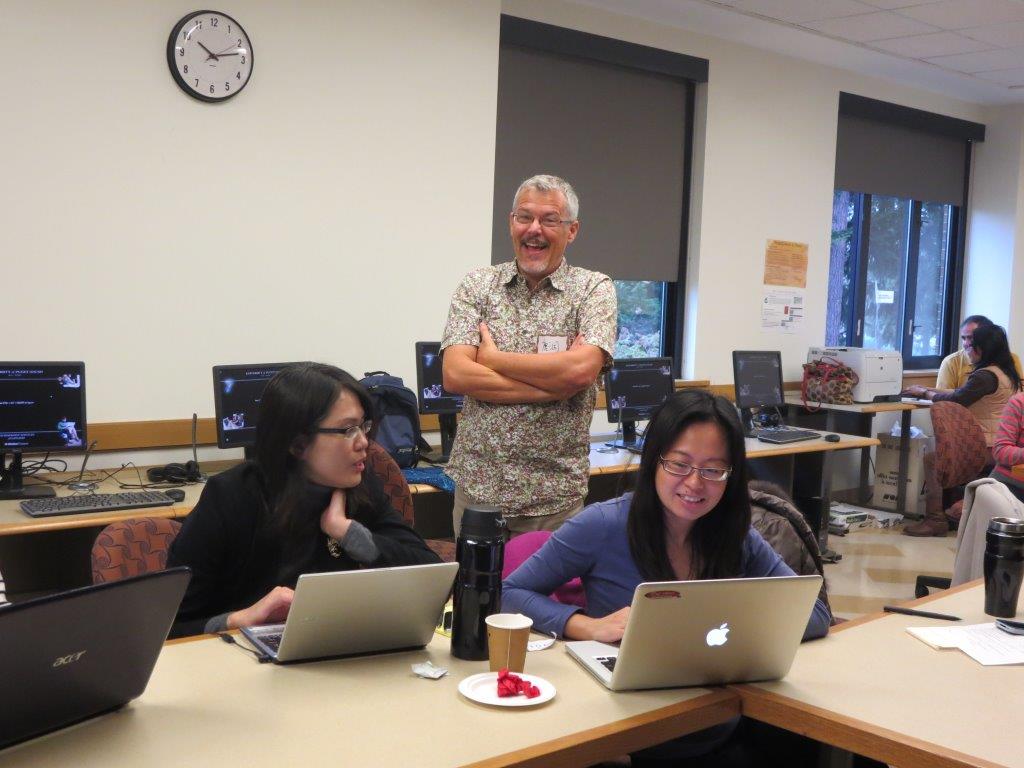
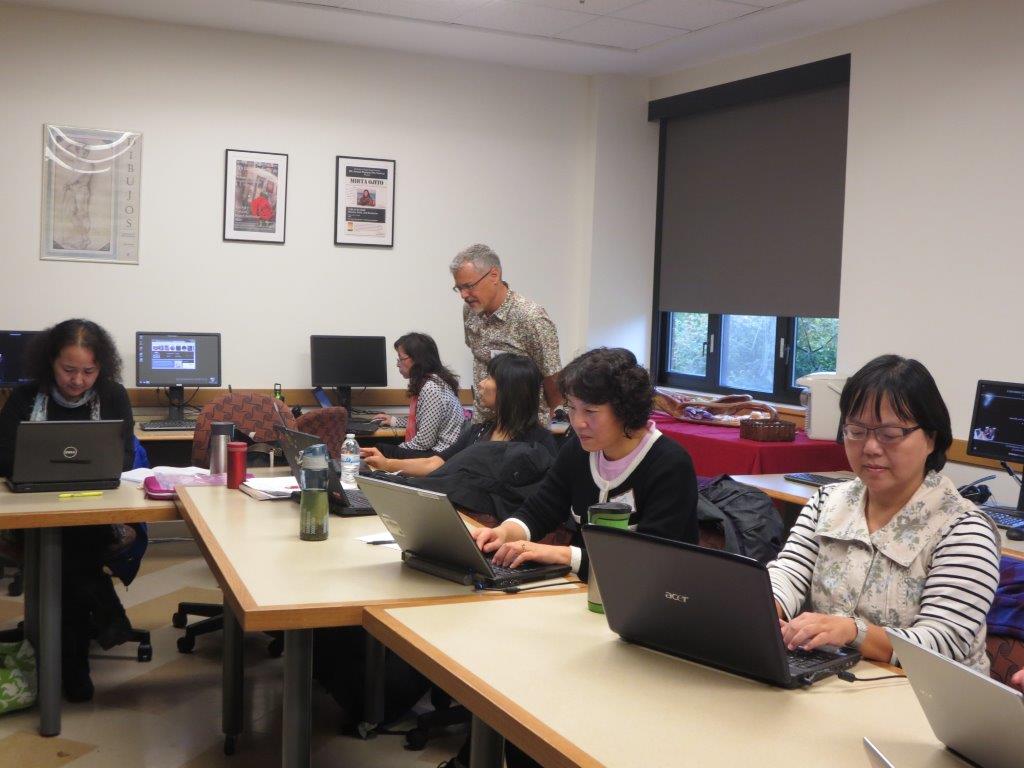
A big Thank You to our guest speaker – Mr. Stephen Tschudi for presenting various useful Google tools that can be adopted in the language classroom right away on Oct 20, 2013. It broadened the participants’ knowledge, trained their skills, and offered them a new angle to design and implement the teaching plan.
We would like to share some comments from our participants here:

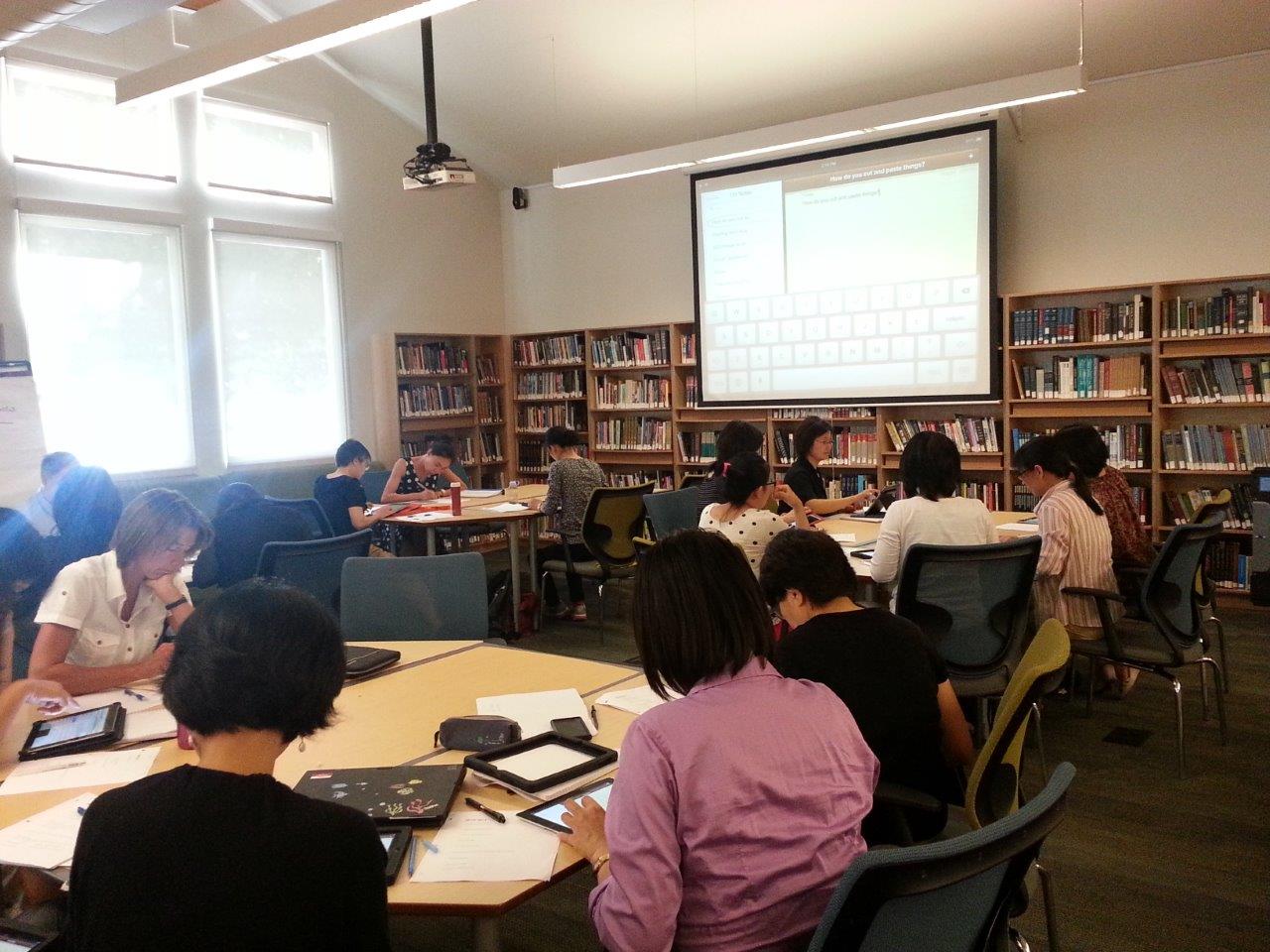
At CLTA-WA’s summer workshop on August 24th, 2013, participants met at the library of University Prep in Seattle. Presenter Juei-Chuan Hung, Chinese instructor of U Prep with a wealth of experience in classroom technology use, led the 34 participants in a 4-hour long workshop on basic ipad skills and how to integrate iPads into the learning experience in the classroom. iPads were made available for the participant who didn’t have one themselves. This ensured that every participant was able to practice the skills that Hung Laoshi was teaching, particular using the apps such as Garageband, Story Creator and Notability. By teaching participants both the basic skills to using an ipad and as well as how apps are used in class activities and projects, Hung Laoshi helped the participants to better use and integrate technology in the classroom that can boost student engagement and provide more creative outlets for learning.
Please see below for a great article written by one of our members. We really appreciate her sharing and would like to encourage more members to connect, inspire and share.
Happy Teaching!
*******************************************************************************************
(From Zhongwenlink)
| 让中文充满文化魅力 |
| 文/露得 |
| 2013年08月23日,星期五 |
|
《侨报》副刊,2013年8月16日 周末在中国超市偶遇一位九年级学生,他把身旁的妈妈介绍给我,那位母亲满面笑容地说:“谢谢老师,我儿子不仅中文大有进步,还对中国文化特别感兴趣,说一定要去中国,我打算暑假带他去。” |
CLTA-WA is excited to announce that professional development grants will be offered again this year for members!
CLTA-WA Teacher Grants help member K-16 and heritage school Chinese teachers in Washington State to receive professional development to attend national/regional conferences, summer institutes, workshops or seminars, or to offset travel costs to attend our own CLTA-WA workshops. Grant funds may be used for fees, travel expenses, books, or other materials that enable applicants to learn subject matter, instructional approaches, and skills. Recipients are expected to share their new learning with their colleagues.
For more information, please click on the Application form. Applications are due by September 15, 2013. Recipients will be notified on or before September 30, 2013.
Thank all the candidates for volunteering their time and talents, the nomination committee, and advisors Lo Sun ‘Lotus’ Perry & Nyan-Ping Bi for their hard work. We would also thank our members for taking time to vote.