“Practical Skills to Flip Your Classroom” 2014 CLTA-WA Summer Workshop

photo 1

photo 2

0
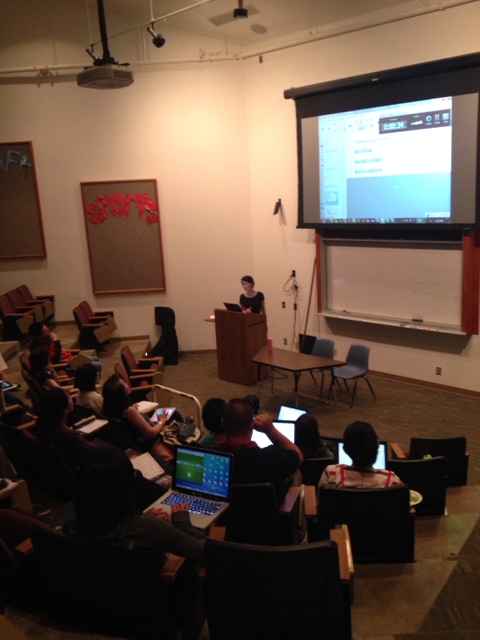
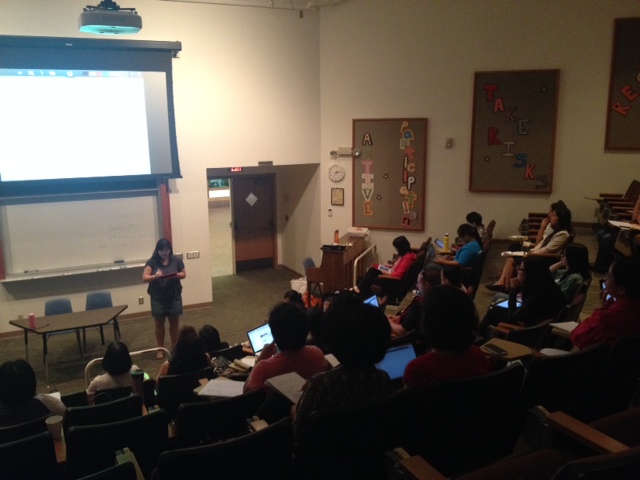
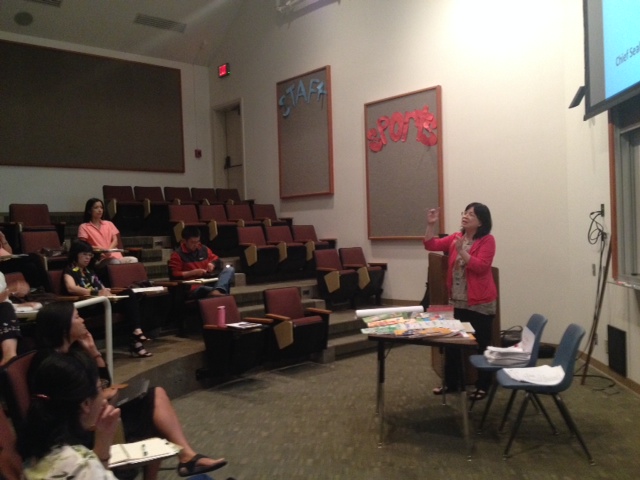
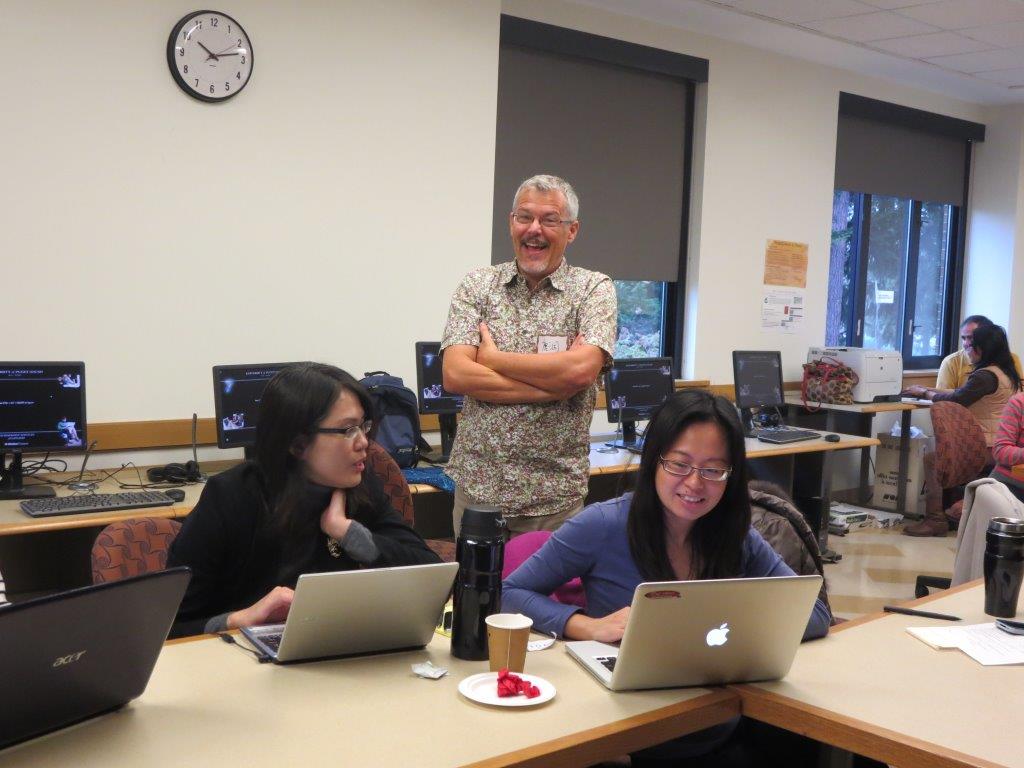
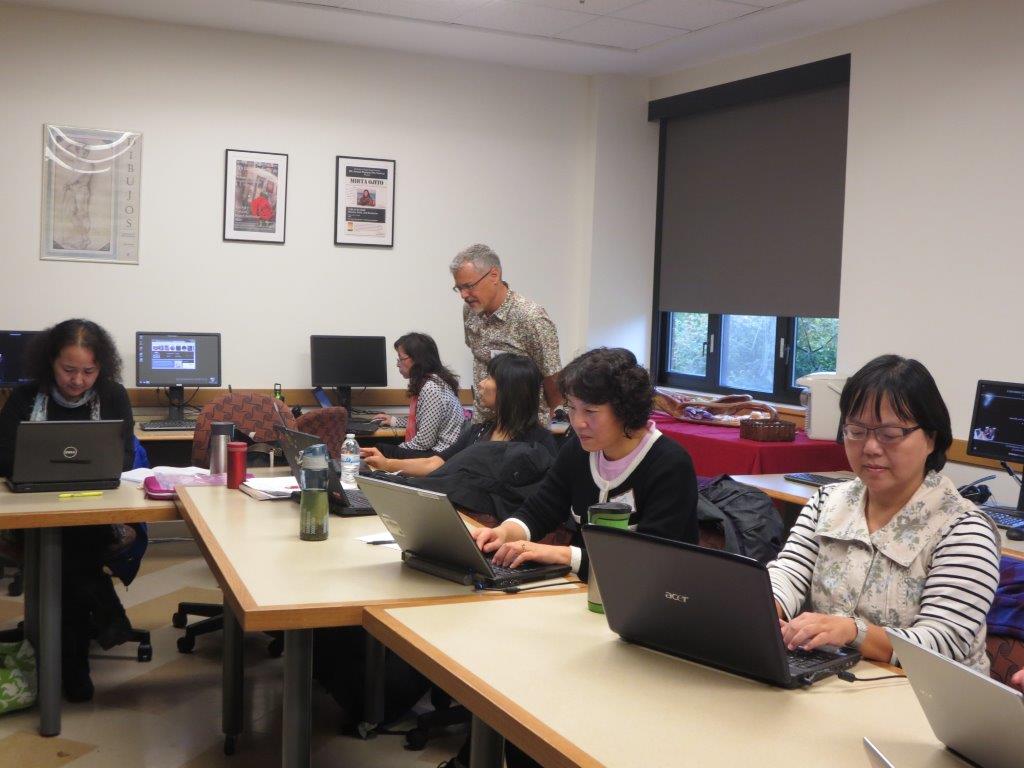
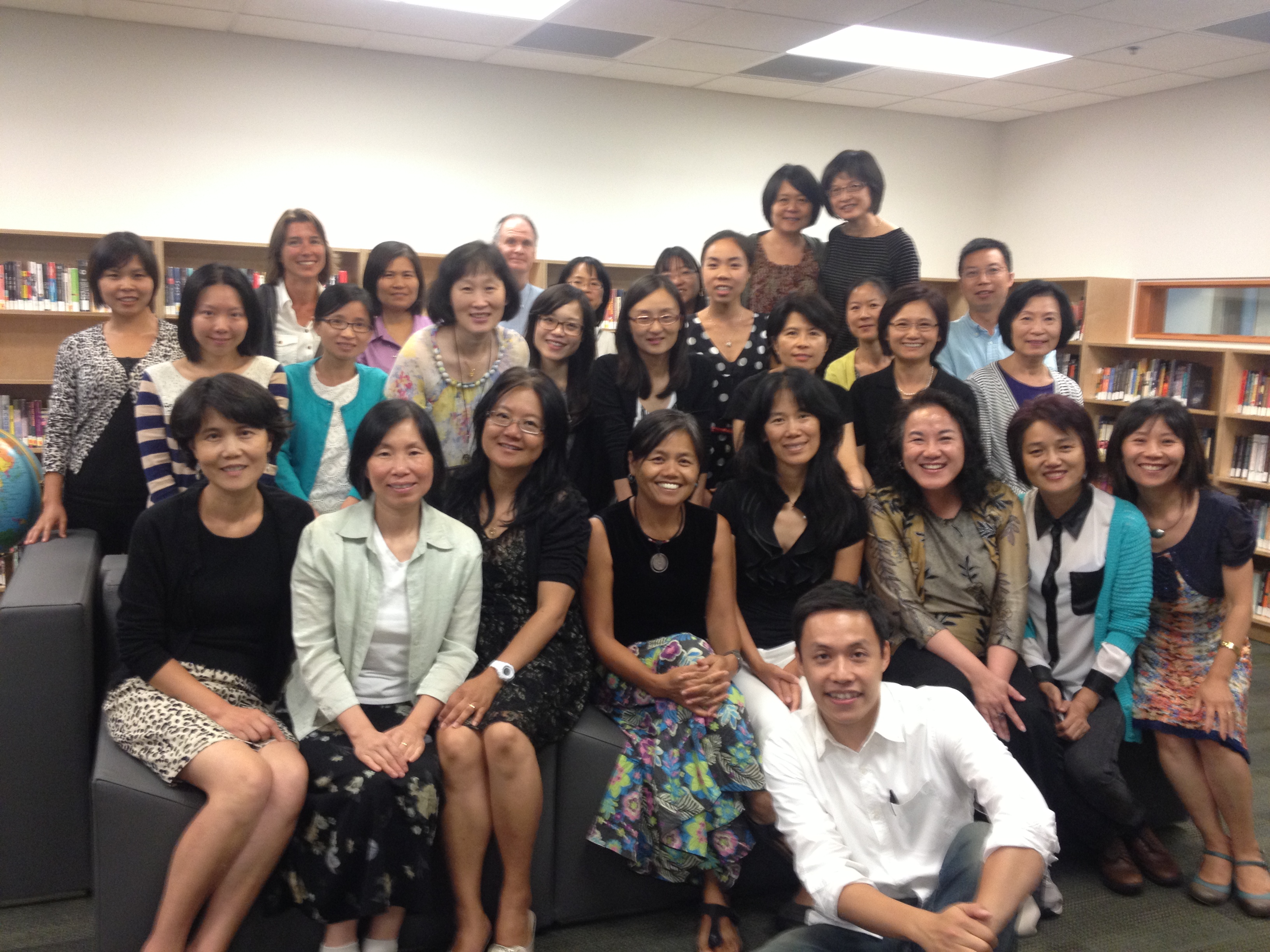
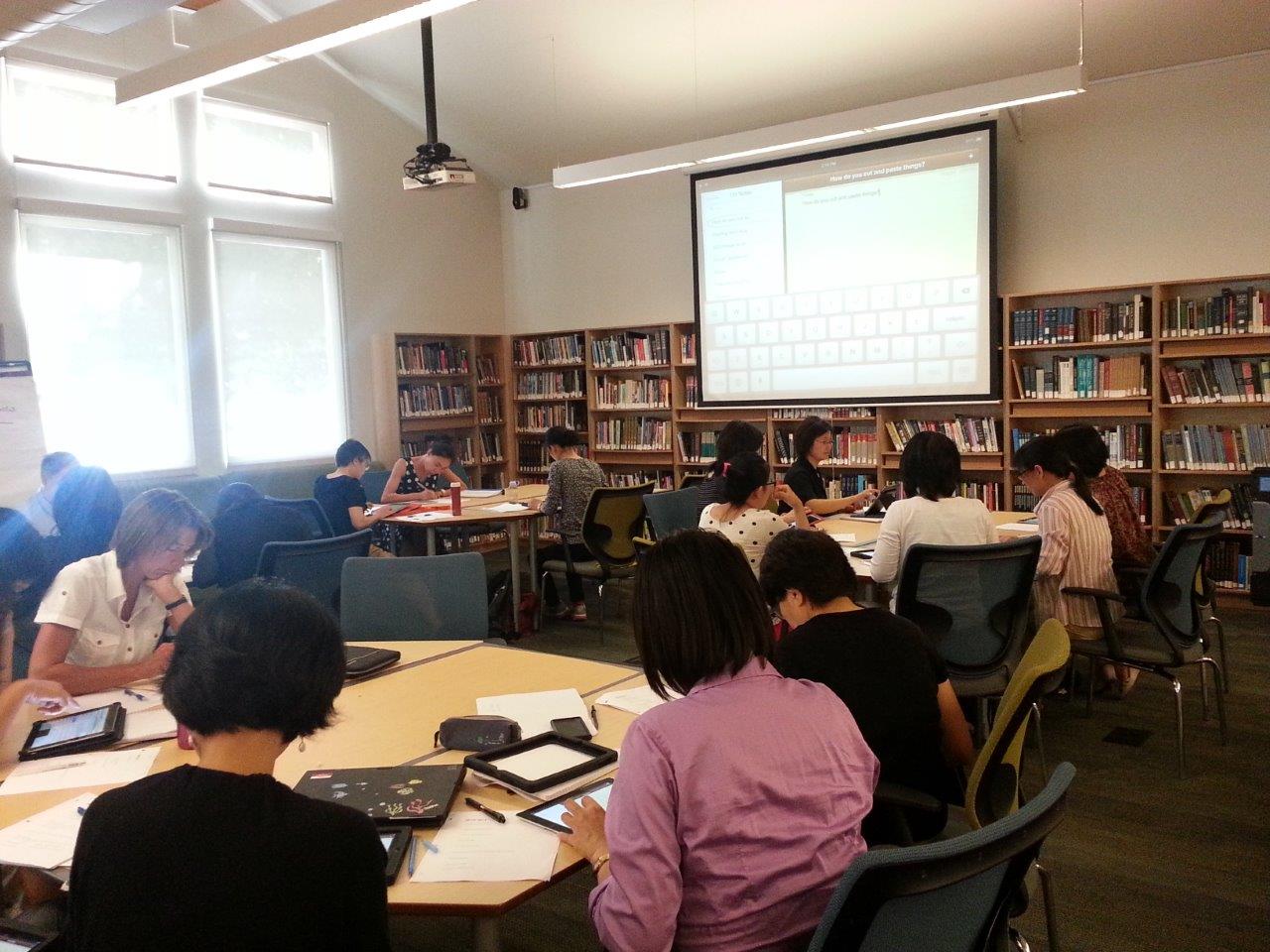
CLTA-WA held its 2014 Summer Workshop “Practical Skills to Flip Your Classroom” at Lakeside School on August 24, 2014. Our presenters were Cheyenne Matthewson from Lakeside School, Zhousu He from Mercer Island High School and Pollyanna Wang from Chielf Sealth International High School. They shared video tips, iPad apps and cooperative learning activities that can be used in a flipped classroom. Participants benefitted greatly from those 3 presentations that were different but fit a common theme. Please see below for some of the strengths that our participants thought.

• I appreciate the real life experience each teacher shared. The lectures were well prepared.
• Handy and applicable to classroom teaching. We can use all these materials right away in our own classroom.
• All of the wonderful introductions of applications and cooperative activities.
• Interesting topics. Experienced teachers.
• Practical; hands on; time efficient; quick application.
• The strongest feature of the workshop was I got some new software that can help out Chinese classes.

Thanks again for the generous support of the Chinese Language Teachers Association (CLTA), the University of Washington, and the Lakeside School. We also would like to express our sincere gratitude to all the participants. Looking forward to seeing you again in next workshop!

Canvas Learning Management System

May 6, 2014

Dear CLTA-WA members,

As a 2013 University of Washington (UW) Technology Teaching Fellow applicant, I was interested in how a learning management system like Canvas could facilitate foreign language teaching and learning inside and outside classroom. I also investigated the possibility of using Canvas to better manage workload for teaching assistants and at the same time not to compromise student learning opportunities.

After being accepted and training as a UW Technology Teaching Fellow Summer 2013 and having integrated Canvas into my courses for Autumn 2013 and Winter 2014, I would like to share with you in a form of a poster of my experience in using Canvas to promote active and collaborative learning for foreign language education. Student feedback was gathered by having students fill out a user satisfaction survey about their learning experience within the Canvas environment. I would like to encourage colleagues in the State of Washington to contemplate the possibilities of using features within Canvas for better information dissemination, grade recording and learning outcome assessment.

Being not-so-tech savvy, my experience of learning and using Canvas and of being supported by the UW Center for Teaching and Learning (CLT) and UW-IT may help foreign language educators identify their pedagogical needs and wants and direct them to the already available resources if they decide to make Canvas an integral part of their course planning or course transformation in the future.

Respectfully submitted by

Nyan-Ping Bi
Senior Lecturer in Chinese Language
Department of Asian Languages and Literature
University of Washington
Seattle, WA 98195-3521

Poster

Questions:

How can instructional technology support students’ and instructors’ needs when

1. Transitioning a beginning foreign language course from a small class size to a large-lecture-and-small-quiz section format?
2. Transforming an advanced foreign language class from a traditional classroom setting to a hybrid class format?

Seeking Resources and Investigating Solutions:

1. 01/2013-03/2013: Joined the UW CTL’s Faculty and Professional Learning
Community facilitated by Professor Ben Marwick.
• Exchanged ideas with colleagues across the campuses on the topic of Engaging Students in Large Classes.
• Learned about Canvas as a learning management system.
2. 03/2013: Attended a UW-IT workshop on the topic of “Canvas as a Tool for Large-Class Engagement.”
3. 03/2013-05/2013: Joined the CTL’s Faculty and Professional Learning Community facilitated by Professor Linda Martin-Morris.
• Shared ideas with colleagues from different disciplines on the topic of “Flipping” the Classroom.
• Discussed the pros and cons of incorporating Canvas in course curricula.
4. 06/2013: Accepted to and attended the weeklong Technology Teaching Fellow Institute offered by the Office of the Provost in cooperation with CTL.
• Addressed pedagogical challenges by utilizing Canvas tools when redesigning a foreign language course.
• Applied skills to redesign a course by integrating Canvas tools to support instructional objectives.
5. 09/2013: Presented the redesigned course to the Institute fellows and received fellows’ reviews and feedback to modify the design before the AY 2013-2014 courses.

Employment of Canvas Tools

AY 2013-2014: Chinese 101-103, First Year Chinese
Winter 2014: Chinese 470, Contemporary Chinese Documentaries

Assessment Method

• Conducted a Canvas user satisfaction survey among students from both courses at the end of the Winter Quarter 2014. Seventy-five students took the survey.
• Reviewed teaching assistants’ time sheets and discussed with teaching assistants their experience using Canvas as an assessment and administrative management tool.

Survey Results and Discussion

Student Survey (See Pie Charts for complete results of the student survey.)
1. Positives: Most of the results were positive. Here are the top three:
95% indicated “the media feedback from my instructor has been helpful.
89% indicated “the options allowing multiple attempts when completing online assignments has helped me study.”
• 89% indicated “the rubric for oral quizzes and tests has been helpful in understanding the predetermined learning objectives.”
2. Negatives: Respondents had only one negative feedback.
40% did not agree that “the Canvas platform encourages peer collaboration.”
3. Canvas features students were most satisfied with:
92%: “Gradebook”
89%: “Quizzes”
85%: “Assignments”

Teaching Assistant Survey
1. Positives:
• Canvas lessened their workload regarding assignment grading as the computer did one-third of grading automatically.
• SpeedGrader gave them easy access to rubric when grading oral quizzes and tests.
• They felt their media comments enabled them to be more attentive to student needs.
• It was easy to monitor individual students’ progress.
2. Negatives:
• Scrolling could become awkward when accessing Canvas on different devices.
• They wished their media comment for one group could be shared with all students in the same group when doing group projects without having the need to create groups within “collaborations.

Conclusions:

• Despite an increase in class size, Canvas creates opportunities for students to obtain individual attention and assistance from their instructor(s) online.
• Despite an increase in class size, Canvas enables the instructor(s) to evaluate students listening and speaking abilities more frequently by incorporating online aural-oral formative and summative assessments.
• Canvas provides instructional technology that is helpful in monitoring student progress and in managing a large size class and a hybrid course for foreign language teaching and learning.
• Further investigation should examine why 40% of the students who took the survey did not agree that “the Canvas platform encourages peer collaboration.” Results from the investigation can facilitate the redesign of online assignments to take advantage of the strengths of the tools of “collaborations” and “discussions.”

Survey Pie Charts

Pie Charts

 

Summer Camp in Beijing

The information below comes from a third party. CLTA-WA posted it for courtesy, so CLTA-WA makes no promises regarding its completeness. Please contact the third party directly.

***************************************************************************

Students, Are you looking for a Summer Learning experience that will immerse you in combination of rigorous instructional session and daily field work for you to use and learn Chinese in real life settings? Teachers, in this camp we facilitate PBL and experiential learning, and how we as teachers best facilitate these approaches with our students. Real Beijing is not a slogan, we walk the walk and promise that you will approach language teaching in a new, enjoyable and effective way! Come join us this summer for an inspiring and exciting learning and growing experience. Check out the flyers below.


GoogleFlow: Designing a chain of activities using Google Tools


A big Thank You to our guest speaker – Mr. Stephen Tschudi for presenting various useful Google tools that can be adopted in the language classroom right away on Oct 20, 2013. It broadened the participants’ knowledge, trained their skills, and offered them a new angle to design and implement the teaching plan.

We would like to share some comments from our participants here:

  • “The model is a great way to involve student voice.”
  • “Use it in my daily teaching immediately.”
  • “The workshop offers some very useful tools to gather authentic data.”
  • “Very detailed steps to guide you through learning process.”
  • “This is an excellent & useful workshop.”

We had a great iPad workshop at U Prep!

At CLTA-WA’s summer workshop on August 24th, 2013, participants met at the library of University Prep in Seattle. Presenter Juei-Chuan Hung, Chinese instructor of U Prep with a wealth of experience in classroom technology use, led the 34 participants in a 4-hour long workshop on basic ipad skills and how to integrate iPads into the learning experience in the classroom. iPads were made available for the participant who didn’t have one themselves.  This ensured that every participant was able to practice the skills that Hung Laoshi was teaching, particular using the apps such as Garageband, Story Creator and Notability.  By teaching participants both the basic skills to using an ipad and as well as how apps are used in class activities and projects, Hung Laoshi helped the participants to better use and integrate technology in the classroom that can boost student engagement and provide more creative outlets for learning.


A Great Article about Culture Points

Please see below for a great article written by one of our members. We really appreciate her sharing and would like to encourage more members to connect, inspire and share.

Happy Teaching!

*******************************************************************************************

(From Zhongwenlink)

让中文充满文化魅力
文/露得
2013年08月23日,星期五

《侨报》副刊,2013年8月16日

周末在中国超市偶遇一位九年级学生,他把身旁的妈妈介绍给我,那位母亲满面笑容地说:“谢谢老师,我儿子不仅中文大有进步,还对中国文化特别感兴趣,说一定要去中国,我打算暑假带他去。”
我听了欣喜不已,比看到学生考试满分还高兴,这正是我教中文的目的之一:培养学生对中国文化的爱好。固然中国经济的强大影响越来越多的美国人学中文,但出于功利因素的动力不是发自内心的热爱,也不会打动孩子们的心。在华裔学生比例较低的学区中文推广依然举步维艰。比如我儿子所在的初中今秋打算新开中文课,岂料报名的学生寥寥无几,学校只好取消中文课,令人扼腕。同校去年开设的日文课却大受欢迎,今年又增一班。日本经济长年衰退,日文却仍具吸引力,很大程度得益于日本动漫的吸引力。我问儿子的美国同学们为什么去上日文课,他们果然都说因为喜欢日本动画片。这些十几岁的美国孩子是看着日本动漫长大的。别说孩子们,连我对宫崎骏的动画片都着迷。
如何以文化带动语言的学习?这是我常常思考的问题。所幸同校的法文老师简妮是一位优秀的外语教师,她教了一辈子的法文,在我们高中的学生及家长们当中口碑极佳,教西班牙文的同事半开玩笑地说简妮的学生都有法国味儿。我在简妮身上看到,好老师的教学不仅仅局限于课堂,更重要的是功夫在课外。简妮向我展示她的“文化分”(culture points)秘诀:为了引导学生们课外探索文化,学生们每学期都必须利用课外时间取得一定的文化分。
在拿来主义之后进行改良,简妮的法文“法宝”成了我的中文“招数”:为家人准备一道中国菜,拍下照片,交上食谱,可得10分;带一道中国菜来给同学们品尝,每人一口,得40分;去中餐馆用中文点菜,请跟你对话的服务员签名,写一篇食物评论,30分;学习一项中国艺术,如书法、国画、水墨画,向班级展示你的作品,10分至60分不等,视作品的努力程度;学唱一首中文歌、学跳一段中国民间舞或学打一套武术,表演或是放录像给同学们看,20分至60分不等,视努力程度;学下中国象棋,并且找对手开杀一盘,请对手签名,向老师报告各棋子中文名称及走法,50分;研究一位中国名人或一座中国城市,写一篇报告(英文可),20分至50分不等,视其深度和长度;看中国电视剧或电视报道,写一篇评论(英文可),视其深度和长度,20分至40分不等;看一部中国电影,写下影评(英文可),50分……
这份单子尽可随时添加,以涵括学生们的各种兴趣和才艺。喜欢美食的,擅长烹调的,能歌善舞的,有艺术细胞的,爱好研究和写作的,都可趁机大显身手,在中国文化的长河中畅游。最受学生们欢迎的一项不消说是看电影,当然是指原汁原版的大陆或港台影片,并且要听中文,英语字幕可以,毕竟电影要看得懂才有意思。
文化分还带来了积极的“副作用”,加深了同学情谊,大家相约周末去中国城下馆子,家有中国父母的人邀请白人同学到家里学包饺子,棋艺在身的人热心教同学们学下中国象棋。文化分还促进了学生与父母的交流,有家长告诉我他们如何享受女儿做的一道道中国菜。
学生们的学习成果还在中文IB(国际文凭)考试中展现,今年参加考试的我的中文四年级学生全部通过考试,其中包括家中毫无中文背景的金发女孩艾比。IB中级考试的难度相当大,从一对一的口试到长篇作文,艾比受惠于她吃过的中国餐和看过的中国电影。
如此看来,教中文岂止是中文教师的责任,中餐馆的厨师们和服务员们,歌舞界的歌手们和舞者们,电影界的导演们和演员们,中文的推广需要我们一起“举全村之力。”

2013 CLTA-WA Professional Development Grants Applications

CLTA-WA is excited to announce that professional development grants will be offered again this year for members!
CLTA-WA Teacher Grants help member K-16 and heritage school Chinese teachers in Washington State to receive professional development to attend national/regional conferences, summer institutes, workshops or seminars, or to offset travel costs to attend our own CLTA-WA workshops.  Grant funds may be used for fees, travel expenses, books, or other materials that enable applicants to learn subject matter, instructional approaches, and skills. Recipients are expected to share their new learning with their colleagues.
For more information, please click on the Application form. Applications are due by September 15, 2013. Recipients will be notified on or before September 30, 2013.

2013 CLTA-WA New Board Member Election Is Open Now

Voting Instructions for Board Director Seats: Please view the Candidate Bio. Each member can vote for up to FOUR candidates. If you cast votes for more than four (4) names, your votes will be disqualified. All ballots will be reviewed and approved by the Election Committee and their determination as to the votes cast by that ballot is final for purposes of such CLTA-WA election decisions. Please select up to FOUR from the list below by clicking on “True” next to the names of the candidates you like to vote for. Click on “False” next to the name(s) of the candidate(s) you are not voting for. Please note: select either “True” or “False” for ALL candidates. If neither is checked, your votes will not be submitted successfully.


Elections close on 2013-04-24. Thank you for voting!


Nominations for the 2013/15 New Board of Directors is officially open!

CLTA-WA invites qualified individuals to apply for consideration to serve on the Board of Directors. If you are interested in nominating yourself or someone else for the board, please send a brief biography either in English or Chinese to president@clta-wa.org.

(CLTA-WA Board Position and Duties)

Nomination opens on April 4, 2013, closes on April 12, 2013. Four board seats are open for nomination.

Please note that CLTA-WA board members need to

  • be a CLTA-WA member in good standing as of April 6, 2013
  • possess necessary qualities and skills and be willing to perform the duties as described in the attached document
  • serve a two-year term from 6/1/2013 to 5/31/2015 (board member may excuse him/herself from the position if situations prevent him/her from serving out the full 2-year term)


Review of applications will be completed by April 14, 2013.  At this time, a list of best qualified candidates of a board selected number will be put forth for the whole membership to vote and elect a final list of new Board members on April 25, 2013. New board members will start their term of service on June 1, 2013 after the AGM.